




What Does a Copywriter Do? Unlock the Secrets of Professional Copywriting for Higher Google Rankings
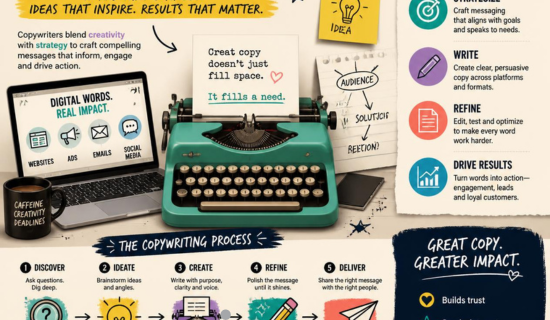
Many people think a copywriter writes words for websites or advertisements. What does a copywriter do? In reality, a professional copywriter researches the audience, understands search intent, optimizes content for search engines, and writes persuasive copy that encourages readers to take action.
Table of Contents,
Whether it’s a blog post, landing page, email campaign, product description, or social media advertisement, every piece of copy has one purpose: help the reader while achieving a business goal.
Today’s copywriters also understand:
- Search Engine Optimization (SEO)
- Answer Engine Optimization (AEO)
- User Experience (UX)
- Content strategy
- Consumer psychology
- Conversion Rate Optimization (CRO)
- Google’s Helpful Content System
- E-E-A-T (Experience, Expertise, Authoritativeness, Trustworthiness)
- Instead of writing only for search engines, modern copywriters create content that genuinely answers users’ questions while naturally incorporating relevant keywords and semantic topics. Become an AI Copywriter: Everything You Need to Know in 2026

The Truth About AI Copywriting Jobs: Myths, Facts & Opportunities
Does a Copywriter Actually Do?
A professional copywriter performs much more than writing. Their responsibilities include: What does a copywriter do?
1. Understanding User Intent
Before writing a single word, experienced copywriters identify why someone searches for a keyword.
For example, someone searching:
“What does a copywriter do?”
is looking for:
- A clear definition
- Daily responsibilities
- Required skills
- Career opportunities
- Salary expectations
- Whether copywriting is a good career
If the article only defines copywriting but ignores these follow-up questions, it fails to satisfy user intent.
Professional copywriters structure content around the complete journey of the reader rather than focusing on a single keyword.
Results-Driven SEO copywriting services for Businesses That Want Growth
2. Keyword Research: What does a copywriter do
Effective copywriting begins with understanding how people search online.
Rather than targeting only one keyword, copywriters identify related terms, long-tail keywords, and common questions that strengthen topical relevance.
For this topic, relevant supporting keywords include:
- SEO copywriter
- Content copywriter
- Copywriting services
- Blog copywriting
- Website copywriter
- Marketing copywriter
- Copywriting examples
- Copywriting skills
- Freelance copywriter
- Digital copywriting
- SEO content writing
- Copywriter job description
- Professional copywriting
- Copywriting process
- AI copywriting
Using these naturally throughout the article helps search engines better understand the topic.
How Professional SEO Copywriting Service Can Skyrocket Your Website Traffic
3. Audience Research
A copywriter doesn’t write for everyone—they write for a specific audience.
For example:
Business Owners want more leads and sales.
Bloggers want higher Google rankings.
Students want to learn copywriting as a career.
Marketing Agencies need scalable, high-quality content.
Each audience has different questions, pain points, and goals. Professional copywriters adapt tone, examples, and structure to meet those needs.
Want Better Blog Results? Here’s How Often to Post (Backed by Copywriting Strategy)
4. Competitor Analysis
Before creating content, experienced copywriters analyze top-ranking pages to identify:
- Topics competitors cover
- Information gaps
- Weak explanations
- Missing FAQs
- Outdated statistics
- Poor readability
- Opportunities to provide more value
The objective isn’t to copy competitors but to create a more comprehensive, helpful resource.
Google Game 2026: Everything You Need to Know in One Complete Guide
5. Structuring the Article: What does a copywriter do
Readers scan content before they read it.
A professional copywriter organizes information using clear headings, short paragraphs, bullet points, and logical flow.
A well-structured article typically includes:
- Engaging introduction
- Table of contents
- H2 and H3 headings
- Step-by-step explanations
- Examples
- Visual suggestions
- FAQs
- Actionable conclusion
This improves both user experience and search engine understanding. Unlock Your Brand’s Potential with the Best SEO Copywriting Agency
6. Writing Engaging Headlines
The headline determines whether someone clicks your content.
Professional copywriters create headlines that are:
- Clear
- Benefit-driven
- Keyword-focused
- Emotionally compelling
- Search-friendly
Examples include:
- What Does a Copywriter Do? Complete Beginner’s Guide
- SEO Copywriting Explained: Skills, Salary & Career Path
- How Professional Copywriters Write Content That Ranks on Google
Strong headlines improve click-through rates and attract the right audience.
Professional seo and content writing services to Grow Your Business Online
7. Writing Content That Converts: What does a copywriter do?
Traffic alone doesn’t grow a business—conversions do.
Professional copywriters guide readers toward meaningful actions, such as:
- Contacting a company
- Downloading a guide
- Booking a consultation
- Requesting a quote
- Joining a newsletter
- Purchasing a product
- Reading another relevant article
Every section of the content should build trust and naturally lead readers toward the next step.
SaaS Write for Us Opportunities That Deliver Real SEO Results
Unlock Hidden SEO Keywords That Can Explode Your Organic Traffic Overnight
8. Optimizing for SEO and AEO
Modern copywriters write for both traditional search engines and AI-powered answer engines.
They optimize content by:
- Addressing search intent directly.
- Using semantic keywords naturally.
- Including concise, answer-focused sections for featured snippets.
- Structuring content with descriptive headings.
- Adding FAQ sections that match conversational queries.
- Linking to authoritative sources when appropriate.
- Incorporating internal links to related content.
- Ensuring readability with short paragraphs and clear formatting.
This approach increases the chances of appearing in Google Search, AI Overviews, voice search results, and other answer-based experiences.
SEO Report Example: How to Create Professional Reports That Deliver Results
Copywriting vs. Content Writing: What’s the Difference?
Although the terms are often used interchangeably, copywriting and content writing serve different purposes.
| Copywriting | Content Writing |
|---|---|
| Persuades readers to take action | Educates or informs readers |
| Focuses on conversions and sales | Focuses on traffic and authority |
| Used for landing pages, ads, emails | Used for blogs, guides, and tutorials |
| Includes strong calls to action (CTAs) | Builds trust and answers questions |
| Measures success by conversions | Measures success by engagement and rankings |
In practice, many modern professionals combine both skills. For example, an SEO blog post should educate readers while also encouraging them to subscribe, contact your business, or explore related services.
Essential Skills Every Professional Copywriter Needs
Successful copywriters rely on a blend of writing, research, and marketing skills.
Research Skills
Every high-quality article begins with thorough research. Copywriters verify facts, study industry trends, understand competitors, and identify questions readers are asking.
SEO Knowledge
Modern copywriters understand:
- Search intent
- Keyword clustering
- Internal linking
- Meta titles and descriptions
- Header structure
- Semantic SEO
- Schema opportunities
- Featured snippets
- AI search optimization
Rather than writing for algorithms, they optimize content to help both readers and search engines understand the topic.
Persuasive Writing
A skilled copywriter knows how to:
- Capture attention with compelling introductions.
- Keep readers engaged through clear storytelling.
- Build credibility with practical examples.
- Address objections before they arise.
- End with a clear and relevant call to action.
Adaptability
A copywriter may write for healthcare in the morning, SaaS in the afternoon, and eCommerce in the evening. The ability to adapt tone, vocabulary, and style to different industries is essential.
How Professional Copywriters Write SEO Blog Posts? What does a copywriter do
High-performing blog posts follow a structured process rather than relying on inspiration alone.
Step 1: Understand Search Intent
Determine whether users are seeking information, comparing options, or looking to make a purchase. The content should match that intent from the first paragraph.
Step 2: Conduct Keyword Research
Identify the primary keyword, supporting keywords, related entities, and common questions to create topical depth without overusing keywords.
Step 3: Create a Clear Outline
Organize the article with logical headings that answer the reader’s questions in sequence. A strong outline improves readability and helps search engines interpret the content.
Step 4: Write Helpful Content
Focus on solving the reader’s problem with practical advice, examples, and clear explanations. Avoid filler or unnecessary repetition.
Step 5: Optimize Naturally
Include descriptive headings, concise paragraphs, internal links, and a compelling meta title and description. Keywords should fit naturally within the content rather than being forced.
Step 6: Edit and Improve
Review the article for clarity, grammar, readability, and accuracy. Update outdated information regularly to maintain relevance.
Common Types of Copywriting: What does a copywriter do
Professional copywriters often specialize in one or more areas.
- SEO Copywriting – Blog posts and web pages designed to rank in search engines.
- Website Copywriting – Homepage, service pages, and company profiles.
- Email Copywriting – Newsletters, promotional campaigns, and customer nurturing.
- Sales Copywriting – Landing pages and product pages focused on conversions.
- Social Media Copywriting – Posts, captions, and ad copy tailored for different platforms.
- Technical Copywriting – Clear documentation, software guides, and technical articles.
- B2B Copywriting – Content targeting businesses and decision-makers.
- eCommerce Copywriting – Product descriptions, category pages, and buying guides.
Many freelance copywriters expand their expertise across multiple formats to serve a wider range of clients.
SEO Copywriting Best Practices for 2026
Google’s ranking systems continue to reward content that demonstrates genuine value rather than simply targeting keywords. To create blog posts that perform well today:
- Write for people before search engines.
- Address the complete search intent, including follow-up questions.
- Demonstrate real expertise with practical insights and examples.
- Use descriptive headings and logical content structure.
- Include naturally related keywords and entities.
- Improve readability with short paragraphs and bullet points.
- Add internal links to relevant pages and external links to authoritative resources where appropriate.
- Refresh important articles periodically to keep them accurate and useful.
By focusing on helpful, trustworthy content, copywriters increase the likelihood of earning stronger rankings, featured snippets, and visibility in AI-powered search experiences.
How Is AI Changing Copywriting?
Artificial intelligence has transformed the way content is created, but it hasn’t replaced professional copywriters. Instead, AI works best as a productivity tool that assists with research, outlines, brainstorming, and editing.
Professional copywriters use AI to streamline repetitive tasks while relying on human expertise to bring originality, experience, critical thinking, and brand voice. Google’s guidance focuses on the quality and usefulness of content—not whether AI was involved in creating it. Articles that demonstrate first-hand knowledge, answer users’ questions thoroughly, and provide unique value are more likely to perform well.
The most effective workflow combines AI with human editing, fact-checking, and strategic optimization.
Common Copywriting Mistakes to Avoid
Even experienced writers can make mistakes that reduce content quality and search visibility. Avoid these common pitfalls:
Writing Without Understanding Search Intent
If your content doesn’t answer the reader’s actual question, it won’t satisfy users or perform well in search results.
Keyword Stuffing
Repeating the same keyword excessively makes content difficult to read. Instead, use related terms naturally and focus on topical relevance.
Weak Headlines
Generic titles attract fewer clicks. Write clear, benefit-focused headlines that accurately describe the content.
Ignoring Readability
Large blocks of text can overwhelm readers. Use descriptive headings, short paragraphs, lists, and examples to improve the reading experience.
Missing Calls to Action
Every article should guide readers toward a logical next step, such as contacting your business, exploring related resources, or requesting a consultation.
Publishing Without Editing
Grammar mistakes, broken links, and outdated information can reduce trust. Always review and update your content before publishing.

Frequently Asked Questions: What does a copywriter do?
What does a copywriter do?
A copywriter creates persuasive and informative content for websites, blogs, advertisements, emails, landing pages, and marketing campaigns. Their goal is to help readers while encouraging meaningful actions, such as making a purchase or contacting a business.
Is copywriting a good career?
Yes. Skilled copywriters are in demand across industries, including digital marketing, SaaS, healthcare, finance, eCommerce, and technology. Freelancers, agencies, and in-house marketing teams all hire experienced copywriters.
What skills does a copywriter need?
Professional copywriters should develop strong writing, research, SEO, communication, editing, and marketing skills. Understanding user psychology and search intent is equally important.
Can AI replace copywriters?
AI can assist with idea generation and drafting, but it cannot fully replace human creativity, strategic thinking, brand voice, or real-world experience. The strongest content typically combines AI efficiency with expert human editing.
What’s the difference between a copywriter and an SEO copywriter?
A general copywriter focuses on persuasive writing, while an SEO copywriter creates content that is both engaging for readers and optimized for search engines, helping websites attract organic traffic.
How long does it take to write a high-quality blog post?
The timeline depends on the topic and level of research. A well-researched, SEO-optimized blog post often takes several hours to complete, including planning, writing, editing, and optimization.
Key Takeaways
A modern copywriter is more than just a writer. They research audiences, understand search intent, optimize content for SEO and AEO, and create persuasive content that supports business goals.
Successful copywriting combines:
- User-first content that solves real problems.
- Strong research and topic expertise.
- SEO and semantic optimization.
- Clear structure and readability.
- Persuasive calls to action.
- Regular updates to maintain accuracy and relevance.
By focusing on helpful, trustworthy, and experience-driven content, copywriters can create articles that rank well, engage readers, and drive meaningful business results.
Conclusion
So, what does a copywriter do? They transform ideas into content that informs, persuades, and converts. In today’s search landscape, successful copywriting requires much more than excellent writing skills—it demands an understanding of user intent, search optimization, audience psychology, and content strategy.
Whether you’re a business owner looking to increase organic traffic, a freelancer building a writing career, or a marketer aiming to improve conversions, investing in high-quality copywriting can make a measurable difference. Content that genuinely helps users while following SEO and AEO best practices is more likely to earn visibility, build trust, and deliver long-term results.
Need Professional SEO Copywriting Services?
If you’re looking for SEO-optimized blog posts, website copy, landing pages, or content that ranks and converts, the team at Wonbolt can help.
Our SEO copywriting services include:
- SEO & AEO-optimized blog writing
- Website copywriting
- Service page content
- Technical SEO content
- SaaS and B2B copywriting
- Content strategy and keyword optimization
- Content updates aligned with Google’s latest ranking systems
Get in touch today:
We create content designed to attract the right audience, improve search visibility, and turn visitors into customers.