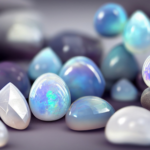
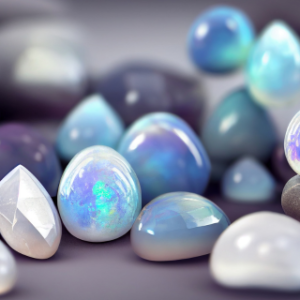


Gemstone Larimar: Have you ever seen a gemstone that looks like a piece of the Caribbean Sea? Its beautiful blue shades and natural white patterns make it difficult to ignore.
The gemstone larimar is one of the most distinctive blue gemstones available today. Its appearance resembles ocean waves, soft clouds, and tropical waters.
Found in the Dominican Republic, this rare stone has attracted jewelry lovers worldwide. Its natural patterns make every polished piece slightly different.
But there’s more to this beautiful stone than its appearance. Its geological history, unusual origin, and limited supply make it especially interesting.
Whether you’re exploring gemstone jewelry or searching for a meaningful gift, Larimar deserves your attention.
Moonstone June Birthstone: Beautiful Meaning Revealed
Let’s explore its origin, colors, meaning, value, and care requirements.
What Is Gemstone Larimar?
Larimar is a rare blue variety of pectolite, a mineral belonging to the silicate family. Its chemical composition is NaCa₂Si₃O₈(OH).
The stone usually displays beautiful shades of blue, turquoise, and blue-green. Some specimens also contain white or gray patterns.
These natural patterns resemble ocean waves moving across a peaceful beach. That’s one reason jewelry designers love working with it.
Copper contributes to its distinctive blue coloration. However, the intensity of color varies between individual specimens.
Unlike many other gemstones, Larimar has an extremely limited commercial source. The Dominican Republic remains its only recognized commercial origin.
According to the Gemological Institute of America (GIA), Larimar is a blue variety of pectolite. Its distinctive coloration and mineral properties make it an interesting gemological material.
Research source: GIA: Blue Pectolite from the Dominican Republic.
Why does it look like the sea?
Its blue color and white markings create a natural ocean-like appearance. No two polished stones have exactly the same pattern.
“Some gemstones shine brightly. Others capture the beauty of the Caribbean Sea.”
Where Does Larimar Come From?
Larimar comes from the southwestern region of the Dominican Republic. Its principal mining area is located near Barahona, particularly Los Chupaderos.
The stone forms within volcanic rocks under natural geological conditions. Copper-bearing pectolite develops its characteristic blue appearance.
Its modern discovery story dates back to 1974. Miguel Méndez and Peace Corps volunteer Norman Rilling rediscovered the stone near the Bahoruco Mountains.
On-Page SEO Checklist for E-commerce Website: Expert Tips
Before receiving its current name, local people called it Piedra Azul, meaning Blue Stone.
The name Larimar combines two elements:
- Lari comes from Larissa, the daughter of Miguel Méndez.
- Mar is the Spanish word for sea.
The name reflects the beautiful blue appearance associated with Caribbean waters.
An earlier discovery was documented in 1916. However, commercial development followed the rediscovery in 1974.
Today, the stone remains closely connected to Dominican culture and local craftsmanship.
A geological study published in 2009 examined Larimar’s origin and formation in the Sierra de Bahoruco region. It provides useful background about the geological processes responsible for this unusual stone.
Research source: Boletín Geológico y Minero: Origin and Model Formation of Larimar.
What Makes Larimar So Special?
Several features distinguish Larimar from other blue gemstones. Its limited origin is one of its strongest characteristics.
Its appearance also changes depending on the stone’s natural formation and mineral composition.
Here are the qualities that attract gemstone collectors:
- Natural blue shades: Colors range from pale sky blue to deeper ocean blue.
- Unique patterns: White markings create beautiful, wave-like designs.
- Limited origin: Commercial Larimar comes from one region of the Dominican Republic.
- Natural variations: Every specimen has its own appearance.
- Jewelry versatility: It works beautifully in pendants, earrings, and decorative pieces.
Interestingly, not every specimen displays the same color intensity. Some have soft pastel shades, while others feature stronger blue tones.
Digital PR SEO: 7 Proven Ways to Boost Rankings
This natural variation gives jewelry designers plenty of creative options.
“The beauty of Larimar isn’t perfection. It’s the natural pattern that makes every piece different.”
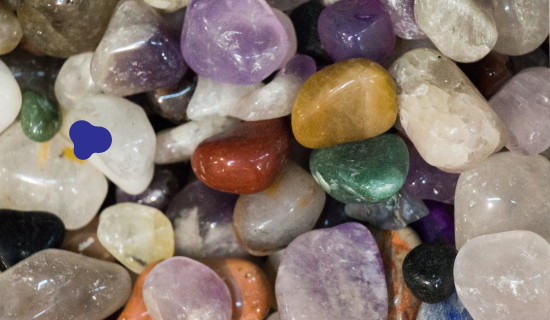
Larimar Gemstone Colors and Their Beauty
Color plays an important role in the appearance and value of Larimar.
The most familiar shade is light ocean blue. However, natural specimens display several attractive color variations.
| Color | Appearance | General appeal |
|---|---|---|
| Sky blue | Soft and pale blue | Delicate jewelry |
| Turquoise blue | Bright blue-green | Tropical designs |
| Deep blue | Rich and intense | Collector interest |
| Blue and white | Ocean-like patterns | Popular jewelry style |
| Greenish blue | Subtle green undertones | Unusual specimens |
Deep blue specimens with attractive patterns often receive greater attention from collectors. The Future of Moonstone Jewelry in an AI-Powered World
However, color alone doesn’t determine quality. Cracks, polish, pattern, and overall condition also matter.
Larimar Gemstone Meaning and Symbolism
Many crystal enthusiasts associate Larimar with peace, communication, and emotional balance.
Its ocean-like appearance inspires these traditional interpretations. People often connect its blue color with calm surroundings and clear communication.
Some crystal traditions also associate it with the throat chakra. This association represents self-expression and honest communication.
Other commonly discussed symbolic meanings include:
- Peace and relaxation
- Clear communication
- Emotional balance
- Creativity and self-expression
- Connection with nature
These associations belong to spiritual and cultural traditions. They aren’t scientifically established properties.
There is no reliable scientific evidence that Larimar treats medical conditions or improves physical health.
Still, many people enjoy gemstones for their personal meaning. A beautiful stone can also become a meaningful reminder of an important experience.
Is Larimar the Atlantis Stone?
You may have heard Larimar described as the Atlantis Stone or Dolphin Stone.
These names come from modern spiritual traditions and gemstone folklore.
Some enthusiasts connect the stone with stories about the lost city of Atlantis. Others associate it with dolphins and the peaceful Caribbean Sea.
However, these stories aren’t supported by geological evidence.
The actual history is interesting enough. Larimar is a naturally occurring blue pectolite formed through geological processes.
Its connection with Atlantis belongs to popular gemstone storytelling, not documented ancient history.
Larimar Gemstone Properties
Understanding its physical properties helps buyers choose suitable jewelry.
Larimar has a relatively low hardness compared with harder jewelry gemstones. Its durability depends partly on its structure and quality.
A 2024 research study examined Larimar’s mineralogy and geochemistry. It explored the geological processes associated with its blue, green, and white varieties.
Research source: Journal of South American Earth Sciences: Origin of Bluish Pectolite, Also Known as Larimar.
| Property | Details |
|---|---|
| Mineral | Pectolite |
| Chemical formula | NaCa₂Si₃O₈(OH) |
| Color | Blue, turquoise, blue-green, white |
| Hardness | Approximately 4.5–6 on Mohs scale |
| Crystal system | Triclinic |
| Luster | Vitreous to silky |
| Transparency | Usually opaque |
| Main source | Dominican Republic |
| Common jewelry cut | Cabochon |
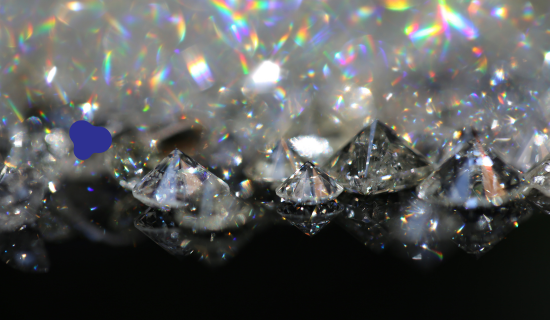
Its hardness makes it more vulnerable to scratches than quartz or sapphire.
Therefore, jewelry settings and wearing habits matter.
For example, pendants and earrings generally experience less impact than everyday rings.
Popular Larimar Jewelry Designs
Larimar’s natural appearance makes it suitable for different jewelry styles.
Its blue color looks especially attractive with silver settings. Some premium designs also combine it with gold.
1. Larimar Rings
Larimar rings offer a beautiful alternative to traditional colored gemstone jewelry. Gemstone June Explained: Hidden Facts About June Birthstones You Need to Know
Their natural blue patterns create eye-catching designs. However, protective settings help reduce accidental damage.
These rings are better suited to occasional wear than demanding daily activities.
2. Larimar Necklaces
Necklaces are among the most popular ways to wear this stone.
A polished blue cabochon can become the main feature of a simple pendant. Silver chains complement its ocean-inspired colors.
3. Larimar Earrings
Small Larimar earrings create an elegant and relaxed appearance.
Designers use polished stones, drop shapes, and decorative silver settings. These styles work well with both casual and formal clothing.
4. Larimar Bracelets
Larimar bracelets often feature polished beads or individual gemstone pieces. Gold Tennis Bracelet Price Guide: Everything You Need to Know About Pricing
Their natural color variations create interesting combinations. Still, bracelets need protection from knocks and hard surfaces.
5. Larimar Statement Jewelry
Large cabochons highlight the stone’s natural patterns.
Some designers prefer irregular shapes instead of perfectly symmetrical cuts. This approach allows the original appearance to remain visible.
How Much Is Larimar Worth? Gemstone Larimar
The price depends on several factors. There isn’t one fixed market price for every specimen.
Color intensity is one important consideration. Deep blue stones with attractive natural patterns often attract higher prices.
Other factors include:
- Overall stone quality
- Natural pattern and visual appeal
- Size and weight
- Surface condition
- Cutting and polishing quality
- Jewelry craftsmanship
- Seller reputation and authenticity
A small, well-cut stone can sometimes be more desirable than a larger specimen with visible cracks.
Additionally, finished jewelry includes design and manufacturing costs. Before Buy: The Ultimate Gold Tennis Bracelet Price Guide
Buyers should compare similar pieces rather than relying on size alone.
Remember that unusually high prices don’t automatically indicate superior quality. Likewise, a low price doesn’t prove that a stone is fake.
How to Identify Genuine Larimar
The popularity of Larimar has encouraged the sale of imitations and look-alike materials.
Some sellers offer dyed stones, glass, ceramics, or other blue minerals as genuine Larimar.
So, checking authenticity is essential before making an expensive purchase. Most Rare Gemstone: 15 Rarest Gems in the World and Why They’re So Valuable
Here are some useful things to examine.
1. Examine the Natural Patterns
Genuine Larimar often displays blue areas with white, fibrous, or cloud-like markings.
Its patterns usually have natural variations rather than perfectly repeated designs.
However, appearance alone cannot confirm authenticity.
2. Check the Stone’s Origin
Ask whether the stone comes from the Dominican Republic.
Commercial Larimar is associated with the Barahona region. A seller should provide clear information about its origin.
3. Ask About Treatments
Find out whether the stone has received dyeing, coating, stabilization, or other treatments.
A trustworthy seller should explain any known treatment clearly.
4. Examine the Surface
Look carefully for cracks, chips, scratches, and uneven polishing.
These details help you understand the actual condition of the jewelry.
5. Request Independent Verification
For expensive purchases, consider an independent gemological examination.
A qualified gemologist can use appropriate testing methods to examine the material.
The Gemological Institute of America has also documented ceramic imitations of Larimar. Its research demonstrates why professional examination matters.
Research source: GIA: Imitation Larimar.
Don’t depend entirely on attractive product photographs or seller descriptions.
How to Care for Larimar Jewelry
Larimar needs gentle handling because of its relatively low hardness.
Good care helps preserve its polish and natural appearance.
Follow these simple recommendations:
- Clean it using lukewarm water and mild soap.
- Use a soft cloth for gentle cleaning.
- Avoid ultrasonic and steam cleaners.
- Keep it away from harsh household chemicals.
- Store it separately from harder gemstones.
- Remove rings before sports or heavy household work.
Heat also deserves attention. Excessive heat can damage the stone or affect its appearance.
Avoid leaving your jewelry inside hot vehicles or near strong heat sources.
A simple storage tip: Keep each piece in a separate soft pouch. This reduces contact with other jewelry.
Is Larimar a Birthstone?
Larimar isn’t an officially recognized traditional birthstone.
However, some people choose it for its blue color and symbolic associations.
Its appearance makes it an appealing gift for people who love ocean-inspired jewelry.
It can also make a thoughtful present for birthdays, anniversaries, and special occasions.
Don’t confuse its personal symbolism with traditional birthstone classifications.
Why Is Larimar Becoming Popular in Jewelry?
Natural gemstones with distinctive colors continue to attract jewelry enthusiasts.
Larimar offers something different from commonly available blue stones. Its white patterns and Caribbean origin create a recognizable appearance.
On top of that, its limited commercial source makes it interesting to collectors.
Small independent jewelry designers can also use its natural patterns creatively.
Imagine someone searching for a meaningful anniversary gift. A simple silver pendant featuring a natural blue stone could feel more personal than a mass-produced design.
That’s where Larimar has particular appeal.
Its beauty doesn’t depend on elaborate decoration. Sometimes, a simple polished stone makes the strongest impression.
“A meaningful gemstone doesn’t need to be the biggest or brightest. It needs to connect with the person wearing it.”
Things to Consider Before Buying Larimar
Buying a natural gemstone requires more attention than choosing an ordinary fashion accessory.
Before purchasing, consider these important details.
Check the stone itself:
- Examine its natural color and patterns.
- Look for visible cracks and surface damage.
- Check the quality of its polish.
- Compare the stone with similar specimens.
Check the seller:
- Ask for its Dominican Republic origin.
- Request treatment information.
- Review the seller’s return policy.
- Consider independent testing for expensive purchases.
Also, ask whether product photographs show the exact stone you’ll receive.
This matters because natural patterns can vary significantly between individual pieces.
Conclusion
Larimar is a remarkable gemstone with a beautiful connection to the Dominican Republic.
Its ocean-blue colors, natural white patterns, and limited origin make it different from many familiar gemstones.
The gemstone larimar also offers interesting jewelry possibilities, from simple silver pendants to statement rings.
However, its relatively low hardness means it needs careful handling. Buyers should also check authenticity, treatments, and overall quality.
Whether you’re a gemstone collector or simply love blue jewelry, Larimar offers something special.
Its natural beauty tells a story that begins in the Caribbean and continues through every carefully crafted piece.
Frequently Asked Questions About Larimar
1. Is Larimar a rare gemstone?
Yes. Larimar is considered rare because its recognized commercial source is limited to the Dominican Republic. High-quality blue specimens are particularly sought after.
2. What makes Larimar blue?
Trace amounts of copper contribute to Larimar’s blue coloration. Its natural shades range from pale blue to deeper turquoise and ocean blue.
3. Is Larimar an expensive gemstone?
Its price depends on color, pattern, size, condition, and craftsmanship. High-quality specimens with attractive deep-blue colors generally command greater interest.
4. Can Larimar be worn every day?
It can be worn regularly with proper care. However, its relatively low hardness makes it vulnerable to scratches and accidental damage.
5. How can you tell if Larimar is real?
Examine its natural patterns and ask about its Dominican Republic origin. For valuable purchases, request independent gemological verification.
6. Does Larimar have healing properties?
Some spiritual traditions associate Larimar with calmness and communication. However, scientific evidence doesn’t establish medical or healing benefits.
Research References and Further Reading
The following scientific and gemological sources provide additional information about Larimar.
International Gem Society: Pectolite and Larimar Gemstone Information. Additional information about Larimar’s properties, jewelry, hardness, and value.
Gemological Institute of America (GIA): Blue Pectolite from the Dominican Republic. Research covering Larimar’s mineral properties, history, origin, and blue coloration.
Gemological Institute of America (GIA): Imitation Larimar. A gemological examination of ceramic imitations and methods for identifying genuine material.
Boletín Geológico y Minero (2009): Origin and Model Formation of Larimar. A geological study explaining Larimar’s formation in the Dominican Republic.
Journal of South American Earth Sciences (2024): Origin of Bluish Pectolite, Also Known as Larimar. Research examining its mineralogy, geochemistry, and geological formation.